Why Offline Options Still Matter
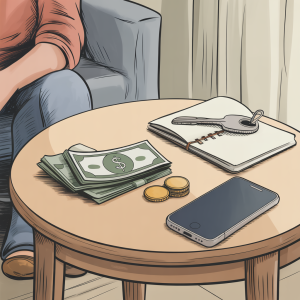 Preparedness is one of those words that tends to put people on edge. Some people hear it and think of worst-case scenarios, dramatic predictions, or stockpiling things they’ll probably never use. Others switch off completely and assume it’s all a bit over the top.
That’s not what I mean by it. What I’m interested in is something much more ordinary, and much less dramatic: what happens when everyday systems don’t work quite as smoothly as we expect them to? Because that does happen. Fairly regularly, actually. And usually without much warning.
Systems work well… until they don’t. Modern life runs on systems. Most of the time they’re efficient and almost invisible, which is exactly what we want.
- We pay by card or phone.
- We expect electricity.
- We assume connectivity.
- We trust machines to do what they’re supposed to do.
Most of the time, they do.
When There Are Problems
But highly efficient systems are also tightly interconnected. A problem in one place can have knock-on effects elsewhere. A power cut can take out card machines. A network issue can stop access to bank accounts. Something local can ripple outward surprisingly quickly. Think of recent headlines where people’s cards didn’t work in supermarkets or bank ATMs were down for hours or even days. The recent Storm Chandra caused powercuts in several places. When these systems are down, you cannot use cards or phones to buy necessities.
This doesn’t mean everything is about to fall apart. It just means inconvenience happens. Preparedness, at least the way I think about it, is about planning for inconvenience rather than catastrophe.
Money that exists, and money you can actually use
One assumption many of us make — and I certainly did for years — is that if money is “in the bank”, it’s always available. In normal circumstances, that’s true. But in an extended power cut or systems failure:
- ATMs don’t work
- card payments don’t work
- phone payments don’t work
- online banking doesn’t help very much
The money hasn’t disappeared. You just can’t get at it. That distinction sounds obvious when written down, but it matters more than we often realise.
A short story about trust, money, and access
You might remember the film Mary Poppins, set in Victorian London. A magical nanny arrives to look after a banker’s children, and one of the father’s firm beliefs is that children should learn to save properly — in a bank.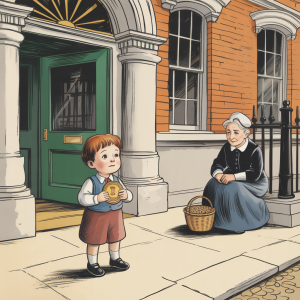
He gives his children two pence to start a savings account and takes them with him to the bank to make the deposit. On the way in, they pass an old woman selling bird seed. A song plays, “Feed the birds, twopence a bag.” The little boy wants to spend his money feeding the birds instead of giving it to the bank.
Inside the bank, the child changes his mind and demands his money back. The adults misunderstand what’s happening. Customers panic. A run on the bank begins, not because the bank has failed, but because people suddenly fear that it might.
It’s an oddly powerful scene, especially when you watch it as an adult.
- Nothing has actually gone wrong.
- The money still exists.
- The institution is still standing.
But confidence wobbles — and suddenly access matters more than theory.
I’m not suggesting we’re living in Victorian London, or that banks are about to fail. What that scene illustrates, though, is something timeless: money isn’t just about where it is kept, but about trust, access, and timing. When systems are calm, we don’t think about it. When they wobble, even slightly, we do.
Why this still feels relevant
What that scene captures — perhaps unintentionally — is the difference between:
- money being accounted for
- and money being usable
It also shows how quickly confidence can change when people feel they might lose access, even temporarily. That’s why I keep coming back to the idea of layers:
- bank money
- some cash
- some flexibility
Not because I distrust banks, but because I don’t like all my options depending on everything working perfectly all the time. The lesson from that scene isn’t that banks are bad — it’s that access matters, and confidence is a fragile thing.
Why having some cash still makes sense
Having a small amount of physical cash at home or on your person isn’t about expecting disaster. It’s about bridging gaps when systems pause or wobble.
Cash is useful when:
- shops temporarily switch to cash only
- card machines are down
- small, local transactions continue informally
And this is important: you don’t need a lot. This isn’t about hoarding or withdrawing large sums. It’s about what I think of as continuity money — enough to keep things ticking over for a short while without stress. I have advised my granddaughter to keep a £20 note in her phone case. If her phone runs out of charge, she would still be able to pay for fuel for her car or a taxi.
Three Days
Thinking in days rather than amounts is often more helpful. Most people already do this (they just don’t call it preparedness). One thing I’ve noticed over the years is that many people already have small offline buffers without thinking of them as such.
- coins in jars
- a bit of cash tucked into a drawer
- money kept “just in case”
These aren’t sophisticated systems. They don’t need passwords or electricity. They don’t depend on anything behaving itself. And that’s exactly why they’re resilient. Highly optimised plans often fall apart under stress. Simple, slightly untidy systems tend to survive.
A generational gap I’ve noticed
Younger people quite naturally pay for almost everything by card or phone. It’s quicker, easier, and feels more secure. Cash, to them, often feels unnecessary. One of my granddaughters works at weekends and is paid in cash. Until recently, she put all of it straight into the bank and paid for everything digitally. From her point of view, that just made sense. Rather than arguing against that, I suggested something very small:
keep a fallback. Not a stash. Just options.
She now keeps the tips she gets as coins and uses those for small purchases instead of always paying by card. Nothing dramatic has changed, but she’s quietly more resilient than she was before.
She’s learning, without being told, that:
- money can exist offline
- systems are convenient, not guaranteed
- having a second way of paying is reassuring
That feels like a useful life lesson, whatever the future looks like. Supply disruptions don’t have to be dramatic to matter. Not being able to buy your weekend groceries is upsetting. Being unable to fill your car tank with petrol can be inconvenient, to say the least.
Disruptions
It’s also worth remembering that not all disruptions involve power cuts or technology failing. At the time of writing, there have been problems at ports due to disputes involving farmers and the government. The reasons aren’t really the point here. What matters is the effect.
- Ports have been blockaded.
- Imports have been delayed.
- Some major stores have reportedly struggled to get certain items, particularly imported fresh produce.
- In a few cases, stores have even had to close temporarily.
Nothing has “collapsed”. Money still works. Systems still exist. And yet… everyday life becomes slightly more awkward. This is how most disruption actually shows up:
- fewer choices
- patchy availability
- delays
- things not being where you expect them to be
Prepared
Preparedness here isn’t about stockpiling. It’s about flexibility. Being able to adapt without panic. Being able to say, “That’s not available — we’ll manage another way.” Preparedness isn’t hoarding (and it isn’t distrust). It’s probably worth being clear about what this isn’t.
Preparedness isn’t:
- hoarding cash
- emptying bank accounts
- assuming collapse
- distrusting systems
Those approaches tend to increase anxiety rather than reduce it.
Preparedness is:
- having options
- spreading risk gently
- reducing stress when things don’t run smoothly
It’s the difference between panic and steadiness. Emergency funds aren’t about fixing everything. One thing that’s taken me a while to accept is that emergency money doesn’t usually solve problems. What it does instead is buy options:
- time to think
- the ability to choose the least bad option
- space to avoid panic decisions
In wider disruption — whether that’s a power cut, supply issues, or something else entirely — that matters far more than having a perfect plan.
Continuity, not control
Preparedness isn’t about controlling the future. That’s a comforting idea, but it isn’t realistic. It’s about continuity when things are temporarily messy.
- Life may slow down.
- Choices may narrow.
- Systems may misbehave.
Quiet buffers help life continue anyway.
Preparedness
A final thought – Preparedness doesn’t need to be loud, political, or fear-driven. It can be:
- ordinary
- practical
- ethical
- slightly boring
- A bit of cash.
- A bit of thought.
- A bit of flexibility.
Not because we expect things to go wrong — but because sometimes, they do. And when they do, it’s reassuring to know you’ve given yourself a few options.
 But recently I was clearing out my daughter’s. Properly clearing it out — not just the obvious fluff in the filter, but the bits that collect underneath and behind, the places you don’t normally look. She hadn’t even known to clear the filter!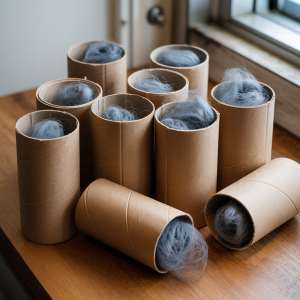
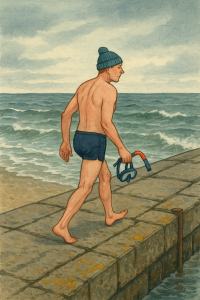 Seeing the year-round swimmer stripping down on the jetty this afternoon, made me think about warmth, resilience, and all the small ways we adapt — which led me to an old idea I hadn’t thought about for some years: greenhouses. Funny that – to see a swimmer and think about greenhouses!
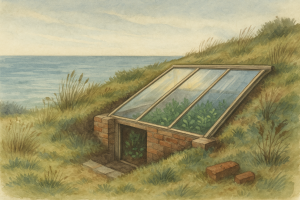 I came across an article about someone who had built an underground greenhouse— a sort of greenhouse dug right into the ground, as opposed to our greenhouse which is built up on blocks. At first I thought it was just an idea someone had come up with, but it turns out these things have been around for ages. They even have a proper name: a walipini, which comes from South America and means “place of warmth.” I rather like that. I love the warmth in a greenhouse.
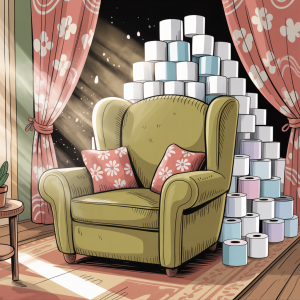 One memory from that period still stands out. Toilet rolls. People joked, but it was no laughing matter when the shelves were bare. I had packs stacked behind a large old armchair, hidden from view but easy to reach if necessary. I even gave a few away to someone nearby who ran out. To this day, I keep a reserve stock — not out of panic, but because it is one item I particularly dislike running out of.
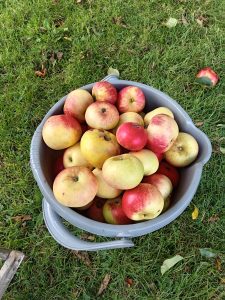 This year’s fruit crop illustrates the point well. Our apple and pear trees produced exceptionally heavily. The load was so great that several branches bent to the ground and one snapped completely, which we had to saw down. We also pruned some additional branches to make future picking easier, accepting that the next year’s crop may be smaller. That is a trade-off, but as we grow older, ease of harvesting becomes more valuable than maximum yield.
 This article may contain
  Brexit
 But I was also sad to see that a number of people said that they did not even know how they would put food on the table THIS week, never mind stocking up for the future. 🙁
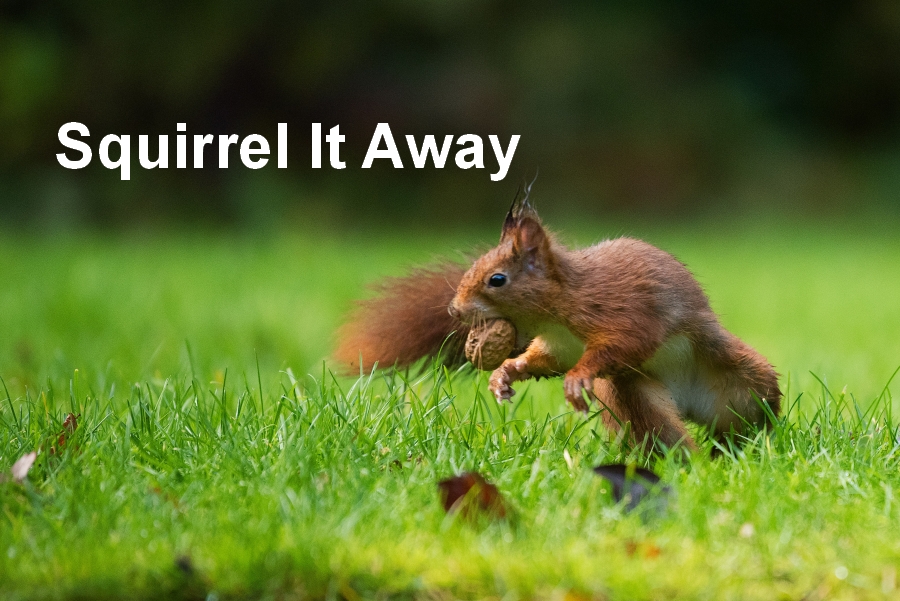 Squirrels hide nuts in Autumn, so they will have something to eat when they wake up (they do not hibernate fully, but wake and go back to sleep again). Get yourself a small box (free from the greengrocer) and put your tins or other non-perishable food in there and hide it away, under your bed, in the wardrobe, under a cupboard, wherever you won’t go straight to when making your ordinary meals. Forget about it, unless there is an emergency. Once Brexit is over, you can add the stuff to your normal store or keep it in case of another emergency in the future. Remember to check dates every so often!
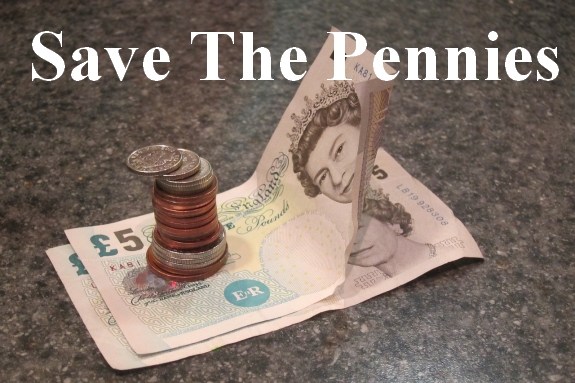 This also applies to any small change you get from the shop. DO NOT throw small change away, store it in a jar. It mounts up. Even keep your small change in a separate pocket and just save what is left over at the end of the week, if you can’t save it each day. Your local small shop will be glad to get paid with change, it often costs them to get more change from the bank for use in their shop!
 Unlawful